Turning Threat Intelligence Into Real Hunt Hypotheses
A systematic process for converting threat intelligence reports and feeds into specific, testable threat hunting hypotheses.
Plenty of hunters read a threat intel report, feel like they’ve absorbed something useful, and then go back to running the same hunts they were already running. The report gets filed away as “good context” without ever converting into an actual query. That gap—knowledge absorbed but never operationalized—is the single biggest waste of good intelligence in most programs, and closing it is really just a matter of having a consistent, repeatable process instead of relying on inspiration to strike.
Step One: Isolate the Technique, Discard the Disposable Details
The first move, covered in earlier pieces but worth restating as a concrete process step, is separating what’s durable in a report from what’s already stale by the time you’re reading it. Specific IP addresses, domains, and file hashes are disposable—sophisticated actors rotate this infrastructure constantly, sometimes within days of a report going public. What’s durable is the technique: the general method used to achieve initial access, persistence, or lateral movement, described independent of the specific infrastructure that happened to implement it this time.
Practically, this means reading a report and asking, for each section, “if this exact infrastructure changed tomorrow, would this technique description still be true?” If yes, that’s your raw material. If the value depends entirely on the specific indicator, file it under tactical intelligence for automated watchlist purposes and move on without expecting it to produce a lasting hypothesis.
Step Two: Map the Technique to Your Own Environment’s Reality
A technique described in a report needs translation into your specific environment before it becomes a testable hypothesis—the same technique looks different depending on what you actually log. Say a report describes an actor using a specific living-off-the-land binary for defense evasion. Before writing a hypothesis, check: do you actually log command-line arguments for process creation events, or just the process name? If you’re only logging the process name, a hypothesis built assuming rich command-line detail will fail immediately, not because the technique isn’t present, but because your hypothesis assumed data you don’t actually have.
This step is where the earlier work on mapping your own data ecosystem pays off directly—a hunter who’s already inventoried their logging gaps can translate a report into a realistic hypothesis in minutes. One who hasn’t will waste time writing hypotheses against data sources that don’t exist in their environment.
Step Three: Write the Hypothesis Using the Three-Part Structure
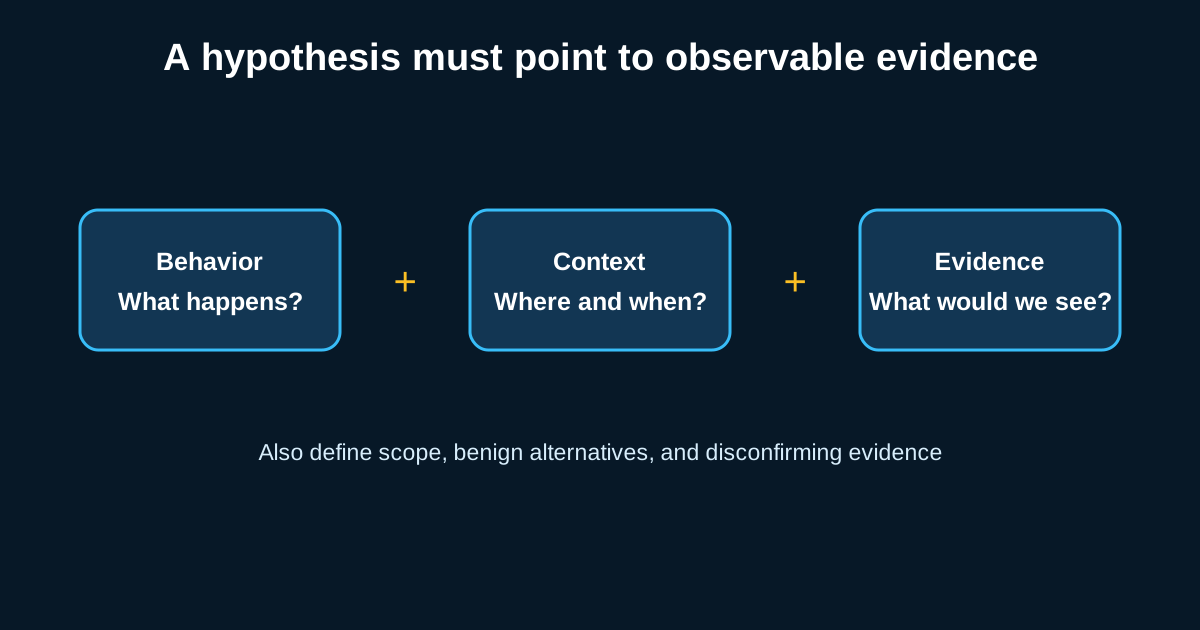
With a durable technique and a realistic understanding of your available data, write the hypothesis using the adversary action, expected artifact, and scope structure from the previous piece. Say a report describes an actor abusing a cloud provider’s legitimate file-sharing feature for exfiltration. Translated: “if data exfiltration occurred via [specific cloud service], we’d expect outbound connections from endpoints to that service’s domains at volumes inconsistent with normal business use of that service, particularly from hosts that don’t normally interact with it—scoped to the last 60 days across all endpoints with outbound internet access.”
That’s specific enough to query, specific enough to fail cleanly if nothing’s there, and directly traceable back to the original report’s finding without depending on any of that report’s disposable infrastructure details.
Step Four: Prioritize Against What’s Actually Plausible for You
Not every technique described in every report deserves a hunt. Prioritization should weigh relevance—does this actor or campaign type actually target organizations like yours, per the sector and landscape work covered earlier—against feasibility, meaning do you have the data to actually test it credibly. A fascinating report describing a technique against a sector completely unlike yours, using a data source you don’t collect, is interesting reading but a poor use of limited hunting time compared to a less exciting report describing something directly relevant to your industry using logs you already have in hand.
Step Five: Close the Loop, Whatever the Outcome
Once the hunt runs, document the outcome back against the original intelligence source—not just in the general hunt log, but specifically noting “tested hypothesis derived from [source], result: confirmed / not confirmed / inconclusive.” This creates a traceable link from intelligence consumed to hunt executed to outcome, which is exactly the kind of record that makes a CTI-to-hunting pipeline auditable and improvable over time, rather than a black box where intelligence goes in and it’s unclear what came out of it.
Making This a Repeatable Habit, Not a One-Off Skill
The value of this process comes from repetition, not from doing it brilliantly once. A hunter who runs through these five steps on every substantive piece of intelligence they read, even briefly, builds a steady pipeline of well-formed hypotheses without needing a flash of inspiration each time. It becomes closer to a checklist than a creative act, which is exactly what makes it sustainable across a full career instead of dependent on having a good week.
Translate one report
Select one reported procedure, remove actor names and disposable indicators, and express the durable behavior in plain language. Map it to local assets and telemetry, list benign alternatives, then score the candidate for relevance, visibility, impact, and effort. Add an expiry or review date so stale assumptions do not remain in the backlog indefinitely.
Threat intelligence does not become a hunt by copying its indicators into a search box. Translation requires local context, observable evidence, and a question that can be answered.