Phase 6 Capstone - Endpoint Hunt Operation
Run a full endpoint hunt against a simulated post-compromise environment the capstone that ties static skills into a real operation.
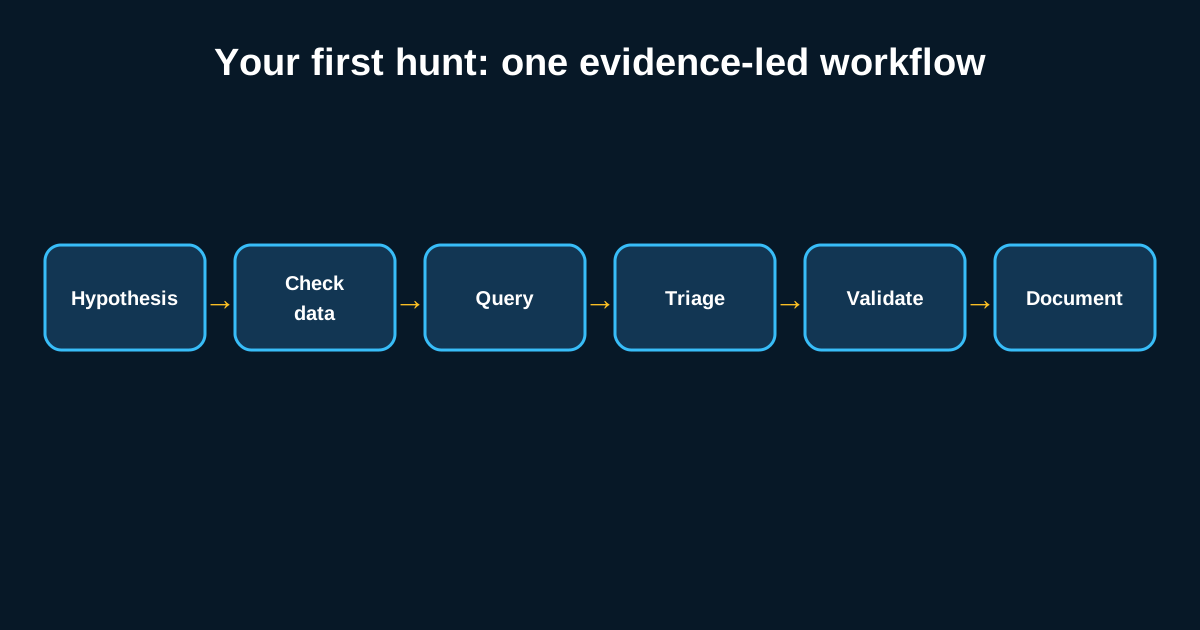
Somewhere around the fortieth hour of studying individual artifacts LSASS access patterns here, cron persistence there, a Sigma rule for shadow copy deletion in another tab most people hit the same wall. They know the pieces. They don’t yet know how to run an actual hunt from start to finish under time pressure, with incomplete information, deciding in real time what to chase and what to let go. That’s the gap a capstone exercise is supposed to close, and it’s the one most training programs skip in favor of one more isolated technique walkthrough.
A post-compromise endpoint hunt isn’t a quiz. It’s an operation with a start time, a scope, and a deliverable, and it rewards the same instincts a real incident does knowing when you have enough evidence to escalate and when you’re chasing a dead end out of stubbornness.
Scoping the hunt before touching a single endpoint
The instinct a lot of newer hunters have is to start pulling data immediately grab every process list, every auth log, every network connection across the whole environment, and sort it out later. That instinct is exactly backwards, and it’s the fastest way to drown in irrelevant data during a real operation with a ticking clock.
Start with a hypothesis grounded in whatever triggered the hunt. Say the scenario opens with a single alert: unusual outbound traffic from a finance department workstation to an IP with no prior history in your environment. That’s your scope anchor. Before pulling anything else, define what you’re trying to confirm or rule out is this beaconing, is it a single connection, is it consistent with known C2 patterns and let that answer determine your next data pull rather than grabbing everything at once and hoping something jumps out.
Building the timeline is the actual skill being tested
Once you’ve confirmed the initial indicator is real, the operation becomes about reconstructing what happened before and after that point, in order, across every artifact source that’s relevant. This is where the individual skills from earlier modules process tree analysis, auth log review, persistence mechanism checks stop being separate exercises and become inputs into a single narrative.
A realistic capstone scenario might reveal, once you dig, that the outbound connection came from a PowerShell process spawned by a Word document opened four hours earlier, which itself came through an email that bypassed a filter because of a slightly misspelled sender domain. Each of those facts individually is a small finding. Strung together in correct chronological order, they tell you exactly how the attacker got in, which is the piece leadership actually needs when they ask “how bad is this.”
The mistake to watch for here and it’s one nearly everyone makes the first few times is treating each artifact discovery as the end of the investigation rather than a pointer to the next question. Finding the malicious Word document doesn’t close the hunt. It opens the question of what that document’s payload actually did once it executed, which is where dynamic analysis instincts from malware work come back into play.
Deciding what’s actually in scope and what isn’t
A realistic post-compromise scenario throws in noise on purpose old vulnerability scan traffic that looks alarming out of context, a legitimate but poorly documented internal tool that behaves unusually, maybe a genuinely unrelated but real security issue sitting alongside the main scenario. Distinguishing signal from noise under time pressure, without an instructor confirming each guess, is arguably the single most transferable skill a capstone can teach.
This is also where over-hunting becomes a real risk worth naming honestly. Spending three hours fully characterizing a red herring while the actual lateral movement activity sits unreviewed in your queue is a failure mode that happens constantly in real SOCs, not just training exercises. Building the discipline to time-box investigation threads, document what you’ve ruled out and why, and consciously move on is worth more than any individual artifact-hunting technique on its own.
Writing up findings like someone else has to act on them
The last piece, and the one that gets rushed constantly, is translating the hunt into something actionable for people who weren’t in the weeds with you. A finding that says “found suspicious PowerShell activity” is close to worthless. A finding that says “PowerShell process launched by WINWORD.EXE at 14:32, established outbound connection to 185.x.x.x on port 443, consistent with a five-minute beacon interval, recommend isolating host FIN-WS-0447 and resetting credentials for the logged-on user” gives incident response an immediate next step.
Practicing this write-up discipline inside a capstone, where the pressure is simulated rather than real, means the first time you do it under genuine incident conditions it’s already a reflex rather than something you’re figuring out live while stakeholders are asking for updates every fifteen minutes.