Okta Threat Hunting - The Identity Provider Itself
Okta sits at the center of the attack surface for thousands of orgs. Here's how to hunt System Log events for compromise and abuse.
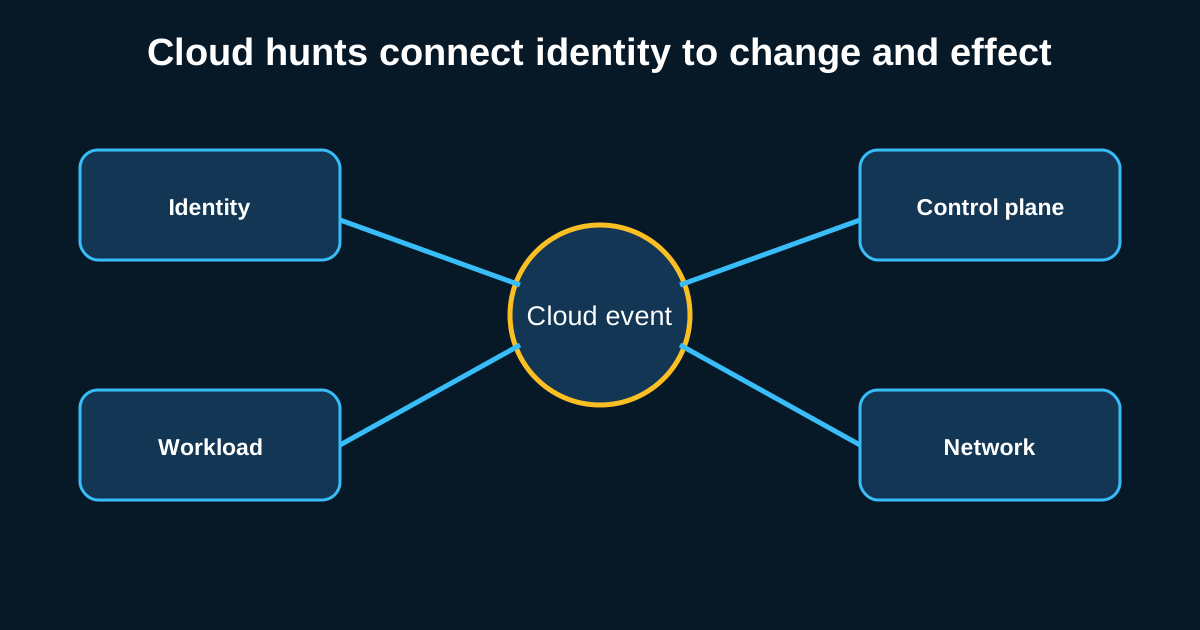
Compromise the identity provider and you don’t need to compromise anything downstream every application federated through it just opens the door for you. That’s exactly why Okta, sitting at the center of so many organizations’ authentication architecture, has become such a consistently attractive target, and why hunting Okta specifically deserves its own dedicated attention rather than getting folded generically into “identity hunting” advice that’s really written with Entra ID in mind.
Okta’s System Log is the primary data source here, and it’s genuinely comprehensive the challenge is the same one that shows up across every rich log source in this series: knowing which of the hundreds of event types actually matter for hunting versus which are routine noise.
MFA fatigue and push bombing leave a distinctive pattern worth building a specific hunt for
Push notification fatigue attacks where an attacker with valid credentials spams MFA push approval requests until an exhausted or confused user finally taps approve have become common enough that they deserve a dedicated, standing detection rather than getting caught incidentally by something else. The System Log signature is fairly clear: multiple user.authentication.sso or user.mfa.okta_verify.deny_push events for the same user within a short window, especially in the middle of the night or outside that user’s normal working pattern, followed eventually by an approval.
A hunt worth standing up: any user account generating more than three MFA push denials or timeouts within a fifteen-minute window is worth flagging immediately, regardless of whether the final push was ultimately approved or not because even a denied push-bombing attempt confirms the attacker has valid credentials and is actively trying to get past MFA, which is exactly the kind of finding that should trigger a credential reset even without a successful login. Waiting for the successful bypass before treating this as an incident means missing the earlier, cheaper opportunity to intervene.
Impossible travel and session anomalies still earn their place, with the same caveats as everywhere else
Okta’s own ThreatInsight and impossible travel detections give you a starting signal, but exactly as with Entra ID risk scoring, sophisticated attackers routing through residential proxies or VPN exit nodes near the victim’s actual location can defeat pure geolocation-based detection. Layering session anomaly detection on top a session that authenticates from one location and then, within the same session lifetime, shows API activity or application access from a meaningfully different location without a corresponding new authentication event catches session hijacking that pure login-time geolocation checking would miss entirely.
Session token theft specifically deserves a dedicated hunt, because it bypasses MFA and password security entirely once the attacker has the token there’s no authentication event to catch, just continued use of an already-authenticated session. Watching for a single session ID showing activity from multiple distinct IP addresses or user agents within a tight time window is one of the better available signals for this, since legitimate users don’t typically bounce between meaningfully different devices and networks mid-session.
Admin console access and API token creation deserve continuous, not periodic, review
Okta admin console access particularly Super Admin role activity should be rare enough in a well-run environment that every instance is worth reviewing individually, the same way Global Admin activation deserves scrutiny in Entra ID. Watch specifically for admin role assignments granted to accounts that haven’t previously held elevated access, and for admin console logins from unfamiliar locations or devices.
API token creation is a quieter but equally important hunt. Okta API tokens, once created, can be used to perform a huge range of administrative actions programmatically, and they don’t require MFA on every subsequent use the way interactive admin console access typically does. A new API token creation event, especially one with broad scopes, deserves the same weight as a new IAM access key creation event in AWS it’s frequently how an attacker who’s gained temporary admin access establishes a persistence mechanism that survives the original access getting revoked.
Application assignment changes reveal what an attacker is actually after
Okta’s role as the SSO hub means application assignment changes adding a user to an app, particularly a high-value app like a financial system, an HR platform, or a cloud admin console are worth hunting for specifically when they don’t correlate with any expected onboarding, role change, or ticketed request. An attacker who’s compromised an Okta admin account frequently uses that access specifically to grant themselves or a secondary account access to downstream applications they actually want, rather than doing anything obviously destructive within Okta itself.
Cross-referencing application assignment changes against your HR system’s role and department data, where that integration exists, catches this efficiently a user in the marketing department suddenly getting assigned access to the production AWS console application is a mismatch that should be nearly impossible to miss if you’re actually looking for it, but plenty of organizations aren’t correlating these two data sources at all.
Treating Okta itself as a Tier 0 asset, hunting-wise
The overarching lesson across all of this: Okta isn’t just another SaaS application generating logs worth occasionally reviewing. Given its role as the authentication chokepoint for everything downstream, it deserves the same Tier 0 treatment in your hunting priorities that a domain controller gets in an on-prem AD environment continuous monitoring, low tolerance for unexplained admin activity, and hunting hypotheses built specifically around how an attacker would abuse the identity provider itself rather than just the applications behind it.