Purple Teaming Fundamentals Bridging Red and Blue
Purple teaming turns red team findings into faster detection engineering cycles. Here's how to run one that actually improves coverage.
Red team drops a report. It’s 60 pages, it’s got a executive summary, and somewhere on page 41 there’s a line about lateral movement via WMI that the blue team never saw. Six months later, the same technique works again in the next engagement. Nobody’s incompetent here the report just never turned into a conversation, and reports that don’t turn into conversations don’t turn into detections either.
Purple teaming exists to fix exactly that failure mode. It’s not a new team you hire. It’s a working method where red and blue sit in the same room physically or virtually and run attacks with detection engineers watching in real time, adjusting as they go.
What Purple Teaming Actually Looks Like Day to Day
Forget the idea that this requires a formal quarterly exercise with a steering committee. The most useful purple team sessions I’ve seen are small and frequent: two or three hours, one technique family, red and blue in the same call.
Red announces they’re about to execute a specific technique say, credential access via LSASS dumping using a less common tool than Mimikatz, something like a custom minidump call through a signed binary. They execute it. Blue watches their SIEM in real time. Did anything fire? If yes, how long did it take and was the alert actionable, or just noise with a technique name attached? If nothing fired, that’s the valuable part now you know exactly where the gap is, with a live example instead of a hypothetical.
This immediate feedback loop is the entire value proposition. Compare it to a traditional red team engagement where blue finds out about gaps three weeks later reading a PDF. By then the attacker’s session state, the specific command lines, the timing all of it is gone. You’re reconstructing from a report, and reconstruction loses fidelity every time.
Turning Sessions Into Detection Backlog, Not Just Notes
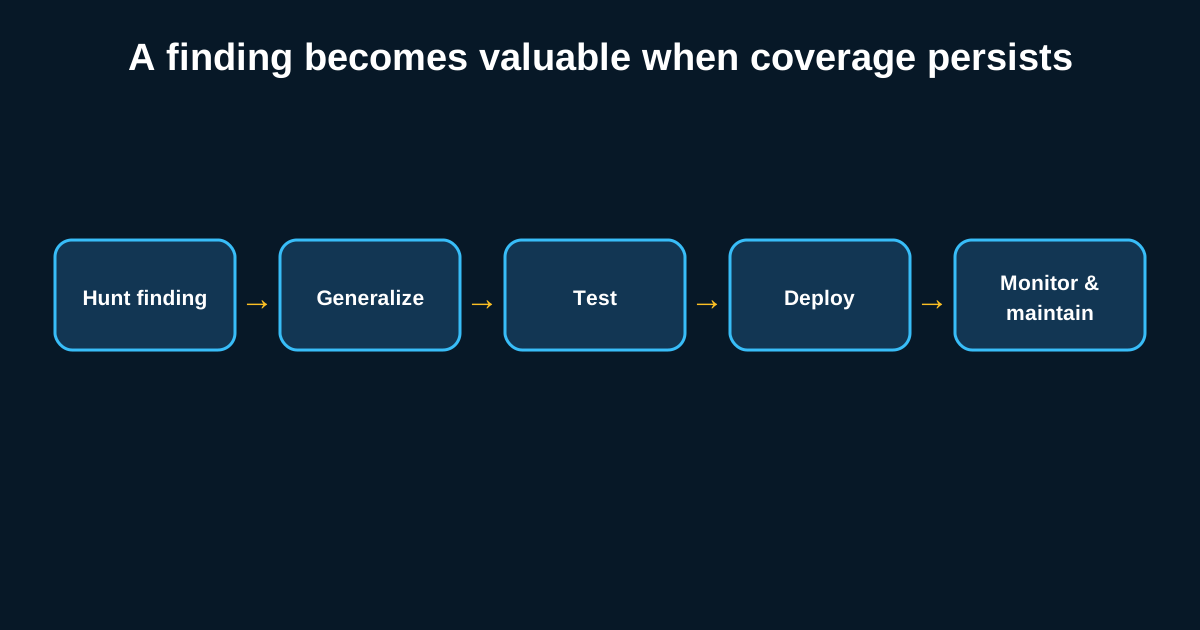
A purple team session that ends with “great session, learned a lot” and no artifacts is a wasted afternoon. Every technique run should produce three things: a confirmed detection gap or a validated detection, a specific log source and field set needed to close the gap, and a ticket in whatever backlog your detection engineers actually work from.
I’d push back on teams that treat purple teaming as a one-time maturity exercise. The real value compounds when it’s recurring monthly, tied to whatever’s trending in current threat intel. If there’s a new ransomware affiliate using a particular LOLBin chain, that’s your next session, not something that waits for the annual red team calendar slot.
Where This Overlaps With Threat Hunting
Purple teaming and threat hunting aren’t the same activity, but they feed each other well. A hunt hypothesis “I think we’d miss X technique” is a natural purple team session waiting to happen. Instead of hunting blind through historical data hoping the technique shows up, you generate it on demand and watch what your stack does.
Conversely, purple team findings generate new hunt hypotheses. If a technique evades detection during a session, that’s worth a retroactive hunt across historical logs to see if it’s already been used against you undetected. That’s an uncomfortable question to ask, and it’s exactly the one worth asking.
The Trust Problem Nobody Mentions
Here’s the part that doesn’t make it into most write-ups: purple teaming only works if blue teams aren’t defensive pun somewhat intended about gaps getting exposed live, in front of red. I’ve watched sessions get awkward fast when a blue analyst feels like their team’s competence is on trial rather than the detection stack’s coverage.
The framing matters more than people admit. This isn’t “let’s see if blue catches it.” It’s “let’s find out together what our stack actually sees, so we can fix it before someone outside the building finds the gap first.” Teams that get that framing right run these sessions monthly and genuinely look forward to them. Teams that don’t, run one awkward session a year and call it done.